User Research
01
Overview
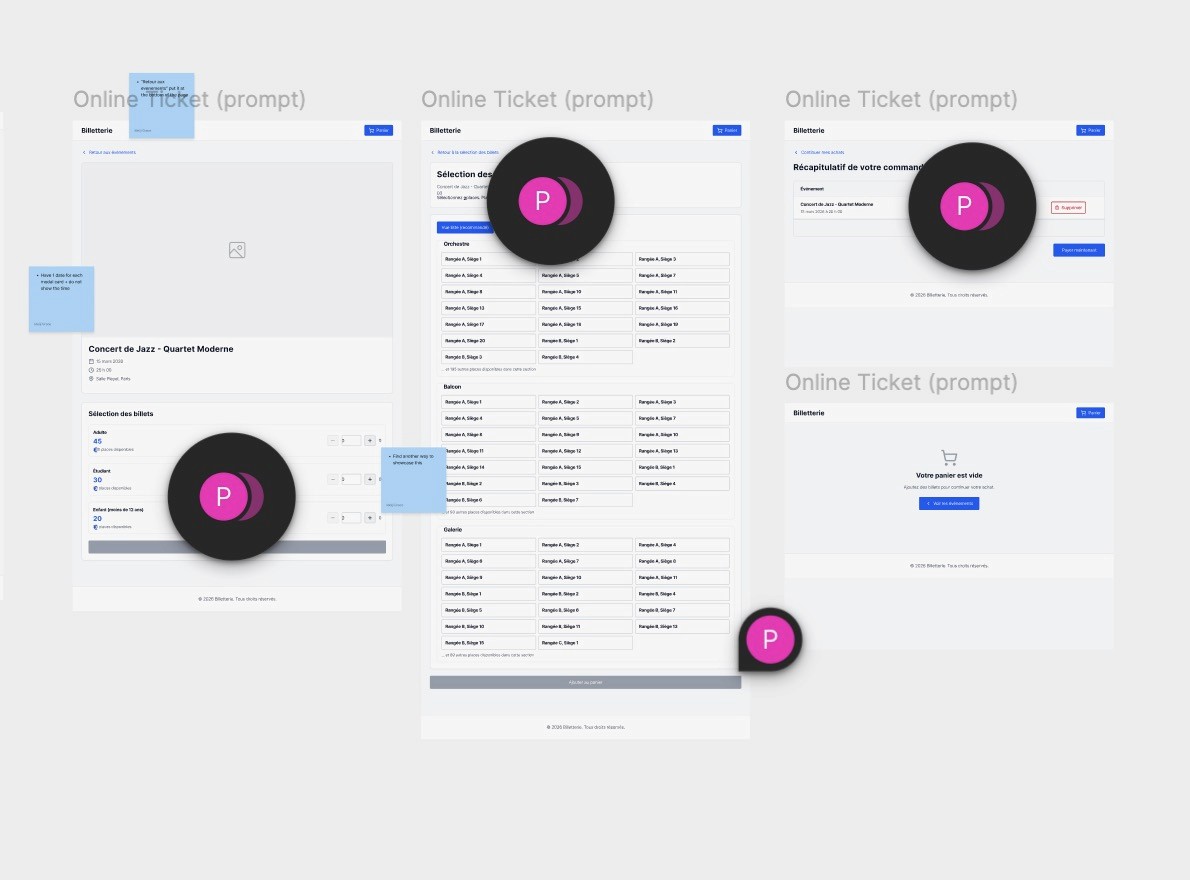
Our client needed a ticketing system (a billetterie) that empowers every user to independently discover, select, and purchase tickets without barriers. What seemed like a straightforward technical challenge quickly revealed itself as a deeply human one.
Category
Discovery & Insights
Challenge
Through our research, we found that most ticketing experiences exclude users at the very moment of purchase. Screen reader users struggle to locate events and actions buried in visual-only layouts. Keyboard-only users get trapped inside seat selection widgets and modal dialogs. People with cognitive or language difficulties lose their way through unclear pricing, checkout steps, and error messages. Mobile users abandon the process entirely due to cluttered, fragmented flows. And visitors seeking accessibility accommodations of wheelchair seating, adapted performances can rarely find that information while booking. For our client, these aren't abstract compliance issues. They're real barriers that force some users to rely on external help just to access a cultural event.


Impact
Our goal was to design a solution that meets high accessibility standards while remaining technically simple, clean, and maintainable built with minimal JavaScript and limited external dependencies, so that accessibility support doesn't break over time. Equity in access was our north star. Every design decision — from semantic structure to interaction patterns to information hierarchy — was made with one question in mind: can every user do this on their own?
